
Discussion Guides
 EDUCATION DISCUSSION GUIDE
Click on the image to the left to view or download the Education Guide, designed for use on college campuses, as well as law schools, high schools, and other learning environments.
The CRIME AFTER CRIME Education Discussion Guide features essay topics and discussion questions for a range of subjects including:
• General Education
• Legal Studies, Public Policy & Civic Affairs
• Women Studies/Sociology
• African-American-Studies
• Jewish Studies
• Human Rights
• Religious Studies
• Rhetoric & Writing
• Film Studies
While intended for the classroom, this guide can be used in wide variety of settings where viewers seek to explore and think critically about the wide variety of issues raised in the film.
 HOME VIEWING & COMMUNITY ACTION GUIDE
Click on the image to the left to view or download this Guide, which will help you gather people around the film to spark change and transform lives.
Through the harrowing and inspiring story of Deborah Peagler, CRIME AFTER CRIME provides a wake-up call regarding the problems of domestic violence, sex trafficking, and mass incarceration in the United States. This award-winning film provides motivation for people to think more deeply about these issues and to get involved in helping to solve these problems. Organizing a home or community viewing of the film is an exciting way to bring people together, harness the emotional power of the film, and channel it towards making a difference in your community.
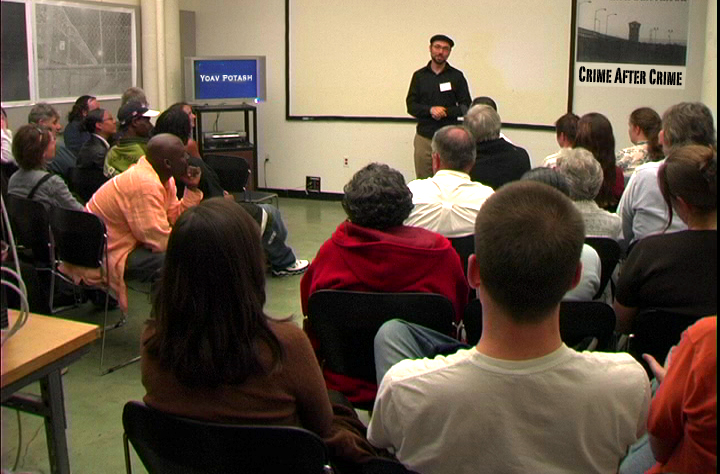 When to use Discussion Guides
Use these discussion guides in any educational setting or at any screening intended to raise community awareness of domestic violence, wrongful incarceration, and the workings of the American criminal justice system.
Feedback
We encourage you to use these guides as a starting point, and to share your responses with us via our contact form or our Facebook page.